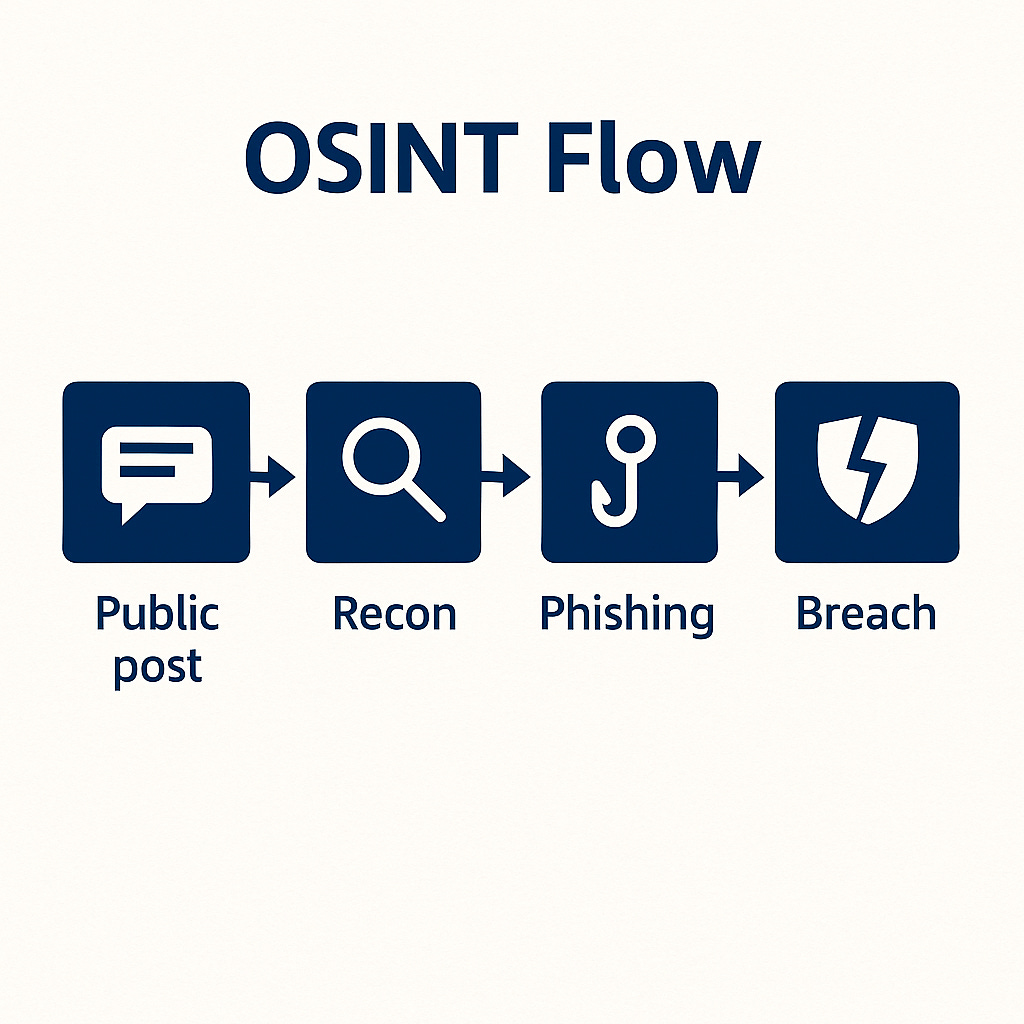
🔎 Trace Protocol Brief: OSINT vs OPSEC — How Attackers Learn Before You Log On
Before malware. Before alerts. Before the breach. There was research.

TL;DR
Modern attacks don’t start with code — they start with curiosity.
Open Source Intelligence (OSINT) is the invisible first phase of most breaches.
Before a single phishing email is sent or a firewall is tripped, someone is building a dossier on your people, your tech stack, and your digital trail.
Defending against it requires mindset, not just tooling.
🎯 What Is OSINT?
Open Source Intelligence (OSINT) is the practice of collecting data from publicly accessible sources. For attackers, it’s low-risk and high-reward — no malware, no logs, no alerts.
What qualifies as OSINT?
Your LinkedIn job title and skills
GitHub commits tied to a company email
YouTube walkthroughs of your office setup
Exposed ports/IPs in public registries
Uploaded PDFs with metadata
Procurement records showing vendor contracts
From this, attackers create a pre-attack dossier: who you are, what tech you use, and where your weak spots lie.
🕵️ OSINT In Action: The Recon You Never Saw
Attackers don’t just scan your systems — they scan your people.
A single post like “we’re rolling out Microsoft 365” can shape an entire attack campaign.
Here’s how it plays out:
👥 People Mapping: Scraping names and roles from LinkedIn to craft spoofed internal emails.
🧱 Tech Stack Profiling: Pulling tech mentions from job posts, StackShare, or public GitHub repos.
📅 Attack Timing: Watching event hashtags or PTO posts to strike when key staff are away.
🔎 Infrastructure Breadcrumbs: Using certificate transparency logs and Shodan to find subdomains and public services.
All of this is legal. All of it is public. And in the right hands, it’s often more valuable than a zero-day.
⚔️ OPSEC: Your First Line of Digital Defence
Operational Security (OPSEC) is how defenders push back — not with firewalls, but with discipline.
It’s not a tool. It’s a habit.
Don’t share internal vendor names or tools on public platforms.
Limit the detail in online job titles and resumes.
Scrub metadata from public documents before uploading.
Monitor mentions of your org across platforms (start with Google Alerts).
Train staff on how even “harmless” posts can be leveraged by attackers.
The irony? Most companies invest in endpoint detection, but leave their digital footprint wide open.
🧪 Tracing the Watchers: How Forensics Rebuilds Recon
When responders investigate a breach, one of the first questions is:
“How did they know what to target?”
Post-breach forensics often reveals signs of earlier recon:
DNS lookups or passive scans weeks before access
Cloned login pages hosted before phishing emails
Certificate registrations for spoofed subdomains
OSINT traces in hacker forums or pastebin dumps
These digital breadcrumbs can serve as intent evidence — especially in attribution or legal proceedings.
🛠️ Tools of the OSINT Trade
Both attackers and defenders use the same stack. Here's a snapshot:
Shodan — Public device and service enumeration
Hunter.io — Discover company email formats
SpiderFoot — Automated recon from domain/IP targets
Recon-ng — Modular framework for infrastructure profiling
Google Dorks — Exposed files and misconfigurations via advanced search
HaveIBeenPwned — Monitor credential exposures and leaks
🧭 Final Takeaway: Why OSINT Is a Precursor, Not an Afterthought
Every breach begins with curiosity.
Your attack surface doesn’t start at your firewall — it starts at Google.
The best attackers win before the fight begins.
And that’s why defenders must treat OSINT as a risk surface, not just a research tool.
Because someone, somewhere, is already building your dossier.
The only question is: what will they find?